
What is Rolfing® Structural Integration?
Rolfing® Structural Integration is a method of manual bodywork and movement education that works with fascia, movement and sensory awareness. What distinguishes the Rolfing method is its whole-body perspective and its particular focus on how the body is organised and functions in relation to gravity.
People come to Rolfing Structural Integration for many different reasons. Some experience pain, recurring tension or restricted movement. Others would like to improve their posture, move with greater ease or develop a deeper awareness of their body.
The aim is to support a more balanced and adaptable organisation of the body, so that standing and moving may become easier and require less unnecessary effort.
How does Rolfing® Structural Integration work?
Rather than treating muscles, joints or painful areas in isolation, Rolfers explore structural and functional relationships throughout the body. They consider how different regions relate to and support one another and how this influences posture and movement.
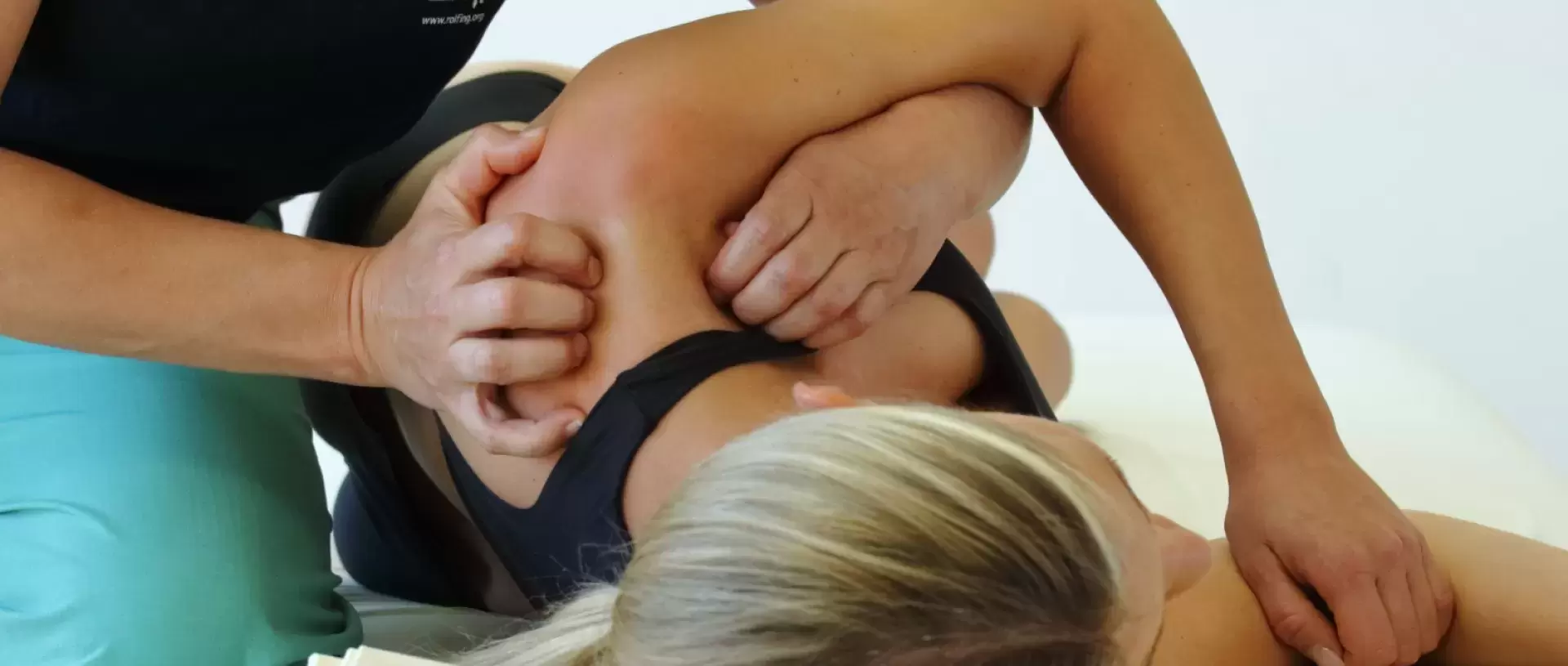
The Rolfing method combines skilled, responsive touch with work involving fascia, movement and sensory awareness. Using precise touch, Rolfers sense different tissue layers and adapt their contact to what they perceive. The touch may be gentle and subtle or more direct; deeper pressure is not necessarily more effective.
Fascia are an important part of this work because they form an interconnected connective-tissue network throughout the body and contribute to movement, force transmission and sensory perception.
Movement and awareness are also integrated into the process. Clients are encouraged to notice how they stand, move and experience their body, recognise habitual patterns and explore other possibilities. The aim is not to impose an ideal posture, but to support a more balanced and adaptable organisation of the body, allowing posture and movement to become easier and less effortful.
→ Discover the benefits of Rolfing® Structural Integration
→ Learn more about fascia and current research
Why is gravity important in Rolfing® Structural Integration?
Gravity is central to the Rolfing method because it acts continuously on the body whenever we stand and move.
Dr. Ida Rolf explored how the body could organise itself so that this constant force could be supported with less unnecessary muscular effort and compensation. When different parts of the body relate to and support one another more effectively, standing and moving may require less effort.
The relationship between the organisation of the body and gravity remains one of the defining principles of Rolfing Structural Integration.
→ Learn more about Dr. Ida Rolf an the origins of the Rolfing® Method
What can Rolfing® Structural Integration help with?
By working with structural and movement relationships throughout the body, Rolfing Structural Integration can help support greater ease in posture and movement, improved mobility, a more efficient distribution of effort and increased body awareness.
Rather than aiming for one “correct” posture, the focus is on adaptability – helping the body respond more effectively to the changing demands of standing, sitting, walking, working, exercising and everyday life.
→ Explore the Benefits of Rolfing® Structural Integration
What happens during Rolfing® Structural Integration?
A session usually begins with a conversation about what brings you to the Rolfer and what you would like to explore. The practitioner may observe you standing, walking or performing simple movements to understand how different areas of your body relate to one another.
During the hands-on work, the Rolfer uses precise, responsive touch to work with fascia and other soft tissues. Depending on the session, you may be lying down, sitting or standing and may be invited to move or direct your attention towards particular sensations.
The process is collaborative. Movement, perception and your feedback are part of the work and can help integrate new possibilities into everyday posture and movement.
What is the Rolfing® Ten Series?
The Rolfing Ten Series is a systematic sequence of Rolfing sessions developed by Dr. Ida Rolf.
Each session explores particular structural and functional relationships. Across the series, different areas of the body are progressively addressed and then integrated into the whole.
The Ten Series therefore does not consist of ten repetitions of the same treatment. It provides a framework for systematically exploring how the whole body is organised and functions in relation to gravity.
Individual sessions are also possible, and Rolfers can adapt their work to a client’s needs and goals.
→ Watch Video to Learn more about the Rolfing® Ten Series
How do clients experience Rolfing® Structural Integration?
Read how people have experienced changes in pain, mobility, posture and everyday movement.
- Michael’s story - overcoming pain
- Christa's story - Rolfing after a hip operation
- Natasha's story - How Rolfing helped to free me from back, shoulder and jaw pain
- Tanja's story - How Rolfing helped me with chest pain and after a 'burnout'
How is Rolfing® Structural Integration different from other methods?
Rolfing Structural Integration shares some techniques and areas of interest with other forms of bodywork and healthcare. What distinguishes the Rolfing method is not just one individual technique, but its systematic focus on integrating structural and functional relationships throughout the whole body in relation to gravity, together with its use of touch, movement and sensory awareness.
- Is Rolfing® Structural Integration the same as massage or deep tissue massage?
No. Massage commonly focuses on relaxation, muscular tension or specific areas of the body. Rolfing Structural Integration looks at how the whole body is organised and how different regions relate to one another in gravity and movement.
Pain, recurring tension or restricted movement are common reasons why people seek the Rolfing method. However, Rolfers may also work beyond the area where discomfort is felt and explore other parts of the body that contribute to the underlying pattern.
Rolfing touch may be subtle or more direct, and movement and sensory awareness are also part of the process. The Rolfing Ten Series reflects this systematic whole-body approach by progressively exploring structural and functional relationships throughout the body.
- What is the difference between Rolfing® Structural Integration and osteopathy?
Rolfing Structural Integration and osteopathy are both hands-on approaches that may consider relationships throughout the whole body.
A defining feature of the Rolfing method is its systematic focus on how the whole body is organised and functions in relation to gravity. Gravity continuously acts on the body whenever we stand and move, and the Rolfing method explores how the body can organise itself in relation to this force with less unnecessary effort or compensation.
The Rolfing Ten Series is a clear expression of this approach: structural and functional relationships throughout the body are progressively and systematically explored and integrated.
A further distinction lies in education. Osteopathic education, regulation and scope of practice can vary according to country, training institution and professional organisation. Rolfing Structural Integration is taught within an international certification framework with shared core competencies and professional standards.
- What is the difference between Rolfing® Structural Integration and physiotherapy?
Rolfing Structural Integration and physiotherapy can both involve hands-on work, movement and education, but they differ in their underlying framework and primary objectives.
Physiotherapy aims to develop, maintain or restore movement and functional ability and may address problems related to injury, illness, pain or reduced physical function.
Pain, recurring tension or restricted movement are also common reasons why people seek Rolfing Structural Integration. However, the Rolfing method focuses specifically on how structural and functional relationships throughout the whole body are organised in relation to gravity and how changes can be integrated into posture and movement.
Physiotherapy is a healthcare profession, while Rolfing Structural Integration is a complementary bodywork and movement education method. It does not replace medical assessment or physiotherapy when these are required.
- What is the difference between Rolfing® Structural Integration and Structural Integration?
Structural Integration is the original term Dr. Ida Rolf used for the method she developed. Today, different schools and practitioners work within the broader field of Structural Integration.
Rolfing Structural Integration refers specifically to the work practised by Certified Rolfers® who have completed recognised training within the international Rolfing network established by the Dr. Ida Rolf Institute®.
Rolfing is a protected trademark and indicates that a practitioner has been trained according to shared educational and professional standards. These standards cover core elements of the Rolfing method, including Structural Integration principles, structural and functional assessment, Rolfing touch, movement education, the Rolfing Ten Series and professional ethics.
Other Structural Integration schools may share historical roots and important principles with the Rolfing method, but their curricula, certification requirements and approaches may differ.
Training, Certification and Scientific Research
What does Certified Rolfer® mean?
Certified Rolfers® have completed recognised professional education in Rolfing Structural Integration.
The Rolfing method is taught within an international framework of shared educational principles and professional competencies. Training includes anatomy, structural and functional assessment, differentiated touch, movement education, the Rolfing Ten Series, therapeutic relationships and professional ethics.
The Dr. Ida Rolf Institute® is the original certifying organisation, and recognised Rolfing institutes around the world like the European Rolfing® Association, work within this international professional framework.
What does scientific research say about Rolfing® Structural Integration?
Rolfing Structural Integration has close ties to the developing field of fascia research. Professor Dr. Robert Schleip, a Rolfer and Research Director of the European Rolfing® Association (ERA), is one of the internationally recognised researchers contributing to our understanding of fascia and connective tissue.
Research relevant to the Rolfing method also includes touch, movement, body perception and Rolfing Structural Integration itself. While the specific evidence base is still developing, the ERA actively supports scientific research and exchange in these fields.
Who was Dr. Ida Rolf?
Dr. Ida P. Rolf was an American biochemist who developed the method she called Structural Integration.
A central idea in her work was the relationship between human structure and gravity. She established the school that later became the Dr. Ida Rolf Institute, and her work developed into what is now known as Rolfing Structural Integration.
The method has continued to evolve, incorporating developments in anatomy, fascia research, movement science and related fields.
→ Discover Dr. Ida Rolf an the history of the Rolfing® Method
Frequently Asked Questions
- What is the Rolfing® Ten Series?
The Rolfing Ten Series is a structured sequence of ten sessions developed by Dr Ida Rolf to work systematically with structural and functional relationships throughout the whole body.
Each session has a particular focus and builds on the previous work. Broadly speaking, the series progresses through three stages:
- Sessions 1–3 focus primarily on more superficial relationships within the fascial system and on creating space and adaptability.
- Sessions 4–7 work more deeply with the body’s structural organisation and its relationship to a central vertical axis.
- Sessions 8–10 place increasing emphasis on integration, helping changes from the previous sessions work together in standing and movement.
The Ten Series is therefore not ten repetitions of the same treatment. It provides a systematic framework for working with the body as a whole and for exploring how different regions relate to one another and function in relation to gravity.
Not every client needs to complete a full Ten Series. Rolfers® can also work with individual sessions or adapt the process according to a client’s needs, goals and previous experience.
- Is Rolfing® Structural Integration right for me?
People seek Rolfing Structural Integration for many reasons, including pain, recurring tension, restricted movement, posture, mobility and body awareness.
The method can also be of interest to people who place particular demands on their bodies through sport, dance, music or other activities. Whether it is appropriate for you depends on your individual situation and goals.
→ Explore the potential benefits of Rolfing® Structural Integration
- Is Rolfing® Structural Integration painful?
Rolfing Structural Integration should not be painful. Some sensations may feel intense or unfamiliar, but effective Rolfing touch is not defined by the amount of pressure applied.
The practitioner adapts the depth and intensity of contact to the client and the tissue being explored. Communication between client and Rolfer is an important part of the process.
→ Read the full article: is Rolfing® Structural Integration painful?
- How many sessions do I need?
Some clients choose individual sessions, while others experience the Rolfing Ten Series, which offers a systematic framework for working with structural and functional relationships throughout the whole body.
Your Rolfer can discuss what may be appropriate for your goals and individual situation.
- How long does a session last?
Session length can vary between practitioners and according to the work being explored. When making an appointment, ask your Rolfer how much time they usually allow for a session.
- How often should I have sessions?
The timing between sessions depends on the individual and on the type of work being undertaken. Your Rolfer will discuss an appropriate rhythm with you, allowing time for changes and new movement experiences to be integrated between sessions.
- What should I wear?
Your practitioner needs to be able to observe movement and work with relevant areas of the body while ensuring that you feel comfortable.
Clothing preferences can vary between practitioners, so ask your Rolfer before your first appointment what they recommend.
- Can Rolfing® Structural Integration be combined with physiotherapy or other healthcare?
Depending on the individual situation, Rolfing Structural Integration may be used alongside physiotherapy or other forms of healthcare.
Some people also explore the Rolfing method during or after rehabilitation from an injury or surgery. In these situations, the timing and suitability of the work should be discussed with the relevant healthcare professional and Rolfer.
The Rolfing method does not replace medical diagnosis or necessary treatment. If you have a health condition, recent injury or concerns about whether the work is appropriate for you, discuss these with your healthcare professional and your Rolfer.
Ready to experience Rolfing® Structural Integration?
If you are curious about how your body could move and organise itself differently, the best way to understand the Rolfing method is to experience it with a qualified practitioner.


